From Streets to Success: Jerry Brazie on Building $500M in Revenue


Did you like the episode? Send me a text and let me know!!
From Streets to Success: Jerry Brazie on Building $500M in Revenue | The Undiscovered Entrepreneur
Episode Description
Jerry Brazie went from living in a $25/week flophouse at 17 to building and selling a dozen businesses generating nearly $500 million in revenue. In this raw, unfiltered conversation, Jerry shares the pivotal moment at 14 that changed everything, why "everything is your fault" became his superpower, and the brutal truths about entrepreneurship that influencers won't tell you.
Key Takeaways
• The "everything is your fault" mindset that transforms victims into builders • Why waiting for the perfect time guarantees failure • How perspective becomes an entrepreneur's greatest superpower • The loneliness of entrepreneurship and how peer groups solve it • Why passion-based businesses often fail (and what to do instead)
Time Stamps
[00:00] Introduction and Jerry's incredible backstory
[04:00] The pivotal moment: beaten and left for dead at 14
[08:00] Why "everything is your fault" is actually empowering
[13:00] The mistake new entrepreneurs make when seeking advice
[25:00] Breaking the perfectionism trap that keeps people stuck
[33:00] Dealing with entrepreneurial loneliness
[38:00] The power of peer-to-peer mentorship groups
[43:00] Battling imposter syndrome even after massive success
[46:00] Six-month goals and launching The Kronos Group
Guest Bio
Jerry Brazie is a serial entrepreneur, 15-year-old high school dropout, and founder of The Kronos Group peer-to-peer mentorship program. With 30+ years building businesses across transportation, real estate, and consulting, Jerry has managed 10,000+ employees and generated $500M+ in revenue.
Connect with Jerry
Website: kronosgroup.org Podcast: The Kronos Group Podcast (formerly The Jerry Brazie Podcast) Ideal for: Business owners doing $1-25M in annual revenue
Mentioned Resources
• Peer-to-peer business groups for entrepreneurs • The Kronos Group mentorship program
#Entrepreneurship #BusinessGrowth #StartupAdvice #Mindset #PeerMentorship #SmallBusiness #EntrepreneurLife #OvercomingAdversity #BusinessPodcast #SuccessStory #GenerationalPoverty #WorkEthic #ImposterSyndrome
Stan.store/skoob for your black Friday coaching deal right now!!
Thank you for being a Skoobeliever!! If you have questions about the show or you want to be a guest please contact me at one of these social medias
Twitter......... ..@djskoob2021
Facebook.........Facebook.com/skoobami
Instagram..... instagram.com/uepodcast2021
tiktok....... @djskoob2021
Email............... Uepodcast2021@gmail.com
Skoob at Gettin' Basted Facebook Page
Across The Start Line Facebook Community
Find out what one of the four hurdles of stop is affecting you the most!!
Black Friday coaching Sale now!! 65% off original price! go to stan.store/skoob to book your appointment and take advantage of this limited time offer!
On Twitter @doittodaycoach
doingittodaycoaching@gmailcom
I Can! I Am! I Will! And I'm Doing It TODAY!!
Jerry Brazie
[00:00:00] This is an undiscovered legacy production and proud member of Pod Nation Media Network
All right, SC believers, let's get across the start line with Jerry Braze, owner of the kronos group.org. Let's go.
Everything that you're going to learn, you can't learn enough as an entrepreneur until you go do it. You can't listen to me enough and hear all of my advice, which is helpful to get you started. I can't teach you what you have to go any more than I could lift the weight for you. You have to go lift the weight and all of the instruction, all of the schooling, all of the inspiration, all of the motivation, all of the videos, all of those, all of the books, all of those things will not.
Make you an entrepreneur, you have to go live it. And so there is this disconnect between kind of the dedication that it takes to do this, to build anything at scale, to have employees, to change your future, to do any of these things that are hard. It requires a dedication [00:01:00] that people just are unwilling to step over and embrace because they don't think they can do it.
And the reality is, in my experience, my vast experience is that most people can, they just don't because they don't believe in themselves enough to go do it.
Salutation scuba believers, and we are here again with another amazing entrepreneur today. We're here with Jerry. Hey Jerry, how you doing? I'm doing fantastic. How are you? I'm fantastic. Thank you so much for taking the time outta your day to be on The Undiscovered Entrepreneur, get across the start line.
I super appreciate you. I'm happy to be here. Absolutely. Alright, so before we get started here, I do have one kind of semi-serious question to ask you. Okay. You ready? Yes, sir. All right. Here we go. Are you a SC believer? Yes, sir. I am a SC believer. I love everything that you're doing, particularly in the entrepreneurial space.
Anything I can do to help that and, and help build that up, I'm a hundred percent here for it. Alright, thanks for sc being a SC believer, Jerry. Super [00:02:00] appreciate it. That's fantastic. Alright, so right here in the very beginning, what I'd like to do here is get an idea of who you are, what your entrepreneur adventure is, and how you got across the start line in your entrepreneur adventure.
The, the, probably the best place to start for me is just to understand so much of who I am today comes from where I come from. And so I have eight brothers and sisters. My mother had six kids when she was 23 years old, if you can imagine that. She brought home an infant and then she had a 1, 2, 3, 4, and 5-year-old at home.
So six kids under, five years and and below. My dad was in and outta the house all of the time working, and so she largely did these things by herself. Slept every other day, those sorts of things for a decade. One washing machine. We, like I said, very, very poor. And so I'm number seven.
My, my, they had those six kids and se and seven years later I came along. And so, I have a little brother and a little sister. They didn't want me to be an only child, and so I got to watch in that environment that I grew up in, my mother go through what, by [00:03:00] any standards could just be, it was just an extraordinary life.
Never complained. She never said a word. I never heard a something come out of her, her mouth. To this day, she's 87 years old. I have dinner with her once a month. She lives on the west coast. I live in Tennessee. And she's extraordinary. And so my baseline watching that I see that now as an adult was, was really founded in man.
My mother knew how to, how to work and she knew how not to complain while she was doing it. So I got a job being a poor kid at 11 years old. I paid taxes in 1980 as an 11-year-old, and I've never not paid taxes since. And when I got that job, washing dishes at a local restaurant, six 30 in the morning to three 30 in the afternoon on Saturday.
They would pay me at the end of the day and I could pick whatever I wanted to eat. And so those, that whatever I wanted to eat in this case happened to be a a club sandwich, with the fries in the middle and the four pieces. And I thought I'd, I'd, I'd have worked all day in that busy restaurant washing dishes for that club sandwich and for me then that [00:04:00] really tied together.
Food and working. And so all of the things that I did relative to business and entrepreneurship comes from the fact that I know how to work. And first and foremost, I got a mortgage on a house at 20 years old. At 20 years old, I didn't know what a mortgage was. I didn't know what an interest rate was.
I didn't know what equity was. I had no idea what these things were. I read an article, said you should buy a house. I paid 12 point a half percent interest on an $87,000 house. And I didn't know what it was. I was as uneducated a person. I lived with hookers and heroin addicts in a, in a $25 a week flop house at 17 years old on the street.
I've got stories of violence and I've been stabbed, shot at, beaten within inches of my life. I had that lifestyle and then I was able to turn that into success again with that underpinning being that my work ethic was second to none. So if you were to know anything about me and my background.
I am who I am in spite of where I come from, but also because of where [00:05:00] I come from. What a fantastic story. You've come really a long ways from from growing up being seven years old and doing what you do to washing and, working for that food. Now I work in the food, in the food industry myself.
I'm a server and I'm the same way too, especially the, the restaurant I work at, it's amazing food and I'm like, I, I'd be happy just to eat the food here. But pay is nice too, but, but you know, that kind of thing. But it's great to be able to always know that you have a meal coming. So I kind of feel for you on that.
But what I'd like to know here is what was that actual turning or turnaround point? I mean, you've gone through a really rough time, and then you said there was a point where it just kind of switched on for you. What was that like? It goes back. It, it's, it, it, there was a, there was an epiphany. I've had two epiphanies in my life and the biggest one was when I was 14 years old.
And when I was 14 again, I'm working, I go, I'm a street kid. I go to the, but I got a bank card. And man in those days, get anything with your name on it. It was really a big deal, particularly when you were as poor as we were. [00:06:00] And so I had a bank card and I had $85 in the bank. I go to the bank, I take the money out.
In those days you had to leave $5. So I take the 80 bucks out. Somebody saw me do it for somebody, saw me do it, and they got me. I should have known no better, but it was my fault and they put it to me. Pretty good. Broke two ribs, broke my nose, rolled me underneath of a bus stop, left me for dead. Away they go.
I wake up a couple hours later. This is in August. Blood streaming down my front. Both eyes are black. Ribs are broken. It, it, it, it was dicey. I get on a bus, go to a transfer point, pass out again at a park again, I know how to use the bus system, all of this. And ultimately at 14 years old, I'm heading home and I get off of that transfer bus and now I have a two mile walk, Portland, Oregon, before you go over the 84 interstate.
I could take you to the square. It's still there. It's an oversight square on the sidewalk, and as I'm walking, beaten and barely alive and kind of just, life just sucks. A voice says to me from my right and behind me, everything is your fault. I thought some lady was [00:07:00] yelling at me. It was a woman's voice, was yelling at me from the duplex right there where I was, and I turned my head to talk to whoever's yelling at me through the window of the duplex, except there was no one there.
And the voice said, everything's your fault. If you don't change today, you're gonna be just like everybody around you. Now, I'm 14 years old. I don't know if that was God or Jiminy Cricket. I don't, in my state, it's hard to say where that came from. I had never heard someone talk like that. I had never heard a voice like that, but it stuck with me.
It did not hockey stick me, meaning I didn't change immediately and it was my hallelu hallelujah moment, but it stuck with me. And it, it, it, it stayed with me for so long that at 28 years old when I was, I had a brand new son born and I was looking at a set of financials from somebody who wanted me to lead, be a lead on a business that was, we were gonna start in the transportation space, which I was really good at.
And I was running this company. It wasn't my company, it was somebody else's company. I didn't know what I was looking at. And I had this kind [00:08:00] of, the whole thing kind of came together where it said. Oh, I see. I don't know what I'm looking at. I gotta change. 'cause if I don't change again, I'm gonna be sitting here at 50 doing the same thing that I'm doing today.
And so kind of was the difference between 14 and 28. And that was the moment where I said to myself, the second best advice, besides everything's your fault that I ever gave myself, whoever it is that's given me this advice, which is shut up and listen. And so at 28 years old a brand new son at home, a half-built house at home, a remodel that we were doing a great job that I had unimaginable to me just 10 years earlier, living on the streets.
I decided to take the jump and begin an entrepreneurial journey based on kind of all of those pieces that happened between 14 and 28 that said, shut up and listen. Stop going to the bar and hanging out with guys to talk about sports. Watch sports play sports play, and watch and talk about sports. All of those things I said I gotta go find some people that are smarter than me, that know more than I do, and then I've got [00:09:00] to shut up and listen.
And that was the catalyst at 28 years old for me to burn all my ships and go do something that I had no idea what I was doing. What a great story. That's amazing. And I think we all go through that point. At one point or another when we become an entrepreneur, it's we, we have that pivotal moment in our life where we're like, okay, we need to do this.
If we're gonna get further along, or if we're gonna make a big change that's gonna be better for our lives. And listening is almost as important in knowing what the question is. You gotta listen to the answer to the question and take it for what it's worth so you can make those improvements for yourself.
So it's great that you had that. Thank you for sharing that with us. But I want to kind of go back to your other point, which was really important, not just for people that are getting started, but people for understanding. What that really means is everything is your fault. We need to take responsibility for our actions and understand that everything that we do is gonna have a, a reaction in the [00:10:00] world.
So when you say everything is your fault, can you kind of give me a better idea of what that really means to, to the, to the new entrepreneur? I'll, I'll, yes in stark terms. So, and, and everything that I do comes from this background that I have growing up the way that I did. And so in that world, in the poor world that I came from, everything is everybody else's fault.
And you are surrounded by people who will tell you that on a daily basis. So you don't just believe it. Everybody else around you believes it. Your family, your friends, your community. Because that's, I think it's much worse today than it was even when I was a kid. But nobody could get out and nobody wanted you to get out because if they, if you got out and buy, get, buy, get out.
I mean, do the things that I've done. If you get out, then kind of their excuse for you getting out or that you got out th goes in the face of their excuse about everything is everybody else's fault. So they, so there is conscious and subconscious, there is a move to try to hold you back. Escaping. What I [00:11:00] call generational poverty.
Institutional generational poverty is something that's very difficult to do, and that epiphany that I had at 14 that said, everything is your fault, made me start looking at everybody over the next 14 years and say. What, did they just gimme an excuse? Was that re legitimate what I heard them say, so that when I became an entrepreneur, the greatest manifestation of this is I've had mistakes made at my business that I didn't make that cost me six figures my companies have done, by the way I've done.
I bought no bought, built and sold a dozen businesses and have done, we're coming up on $500 million in revenue over the last 30 years. So some really 10,000 employees, really big businesses and I've that have cost me a hundred thousand dollars, $150,000. These are mistakes. Rather than get upset about that mistake, I look at it and go, what did I do?
So the employee, maybe the employee needs to be fired, but maybe the employee can be safe. Maybe I put that employee in a bad position. Maybe I put that pos, that person, the power. I [00:12:00] let somebody make a mistake so large that it cost me a hundred thousand dollars, but at the same time, so, so I look through that lens always, it's my fault.
It is crystal clear. There is no emotion in business. You can be emotional about your business, but there's no emotion in business, there's no emotion in making decisions. You have to be clear-eyed about it. And so when it's always your fault, the rage that you will put off on somebody else for the mistake that they made.
Benefits you and them and makes the business easier to operate. And so in that context and in in, in a reality like that, you just have to say, what did I do? That's fine. I get what you did. Let me figure this out. Lemme think about it for a minute. What did I do? And then you work backwards from there to get rid of the process that allowed that person to lose you $150,000.
Yeah, and it makes for a great point too, and I'm gonna use that, that on purpose because when we're looking at going through things, we point the finger out there, we're pointing at other [00:13:00] people. It's their fault, it happened, their fault. What you really need to do is turn that finger around and point yourself, what did I do?
What, yes, how did I contribute in this situation? And what can I do to fix it? What can I do to overcome it? What can I do to make the situation better? So it's, it's taking that negative thing of pointing out there. And really, if you really think about it, turning into a positive thing and making yourself grow.
'cause the more you can grow, the more, better, the better things are gonna be, not just for you, but for the people around you too. And, and I, I'll, I'll, I'll, I'll, I'll add to that. From a new entrepreneurial perspective in, in particular, is that I did not come in with any kind. I had learned this at 28. I was ready for this at 28, so I was ready to absorb all of the advice people gave me without fighting back too many new entrepreneurs or want to be entrepreneurs.
In my experience, having, having dealt with, I don't know how, maybe thousands at this point. Every time you go to talk, I have a rule. If you ask me for [00:14:00] advice and you start talking within about nine words of me having given a que given an answer. I can't help you. Mm. I already know that I can't help you because we all think in our heads our situation is different.
He doesn't understand what, what, what my motivation is. He doesn't understand what I'm trying to get done. He doesn't understand the circumstances that I'm under. And the reality is, is somebody who's talked to so many people in the exact environment that this person asking me this question is entrepreneurs and and soon to be entrepreneurs or wanna be entrepreneurs is that y'all get in, y'all get in your own ways.
And because my advice isn't easy, but the whole process isn't easy. But Jerry, I saw the, in the influencer, said that I can just go from zero to a hundred and I'm gonna make $10,000 a month, and all I gotta do is work four minutes a week and, all of these things. And I go, that's great.
But I've never met that entrepreneur. I've never, I've met hundreds of entrepreneurs. I know massively well off entrepreneurs who have done very well for themselves, who have, who have done it from nothing. And the story is always the [00:15:00] same. And so I'm using real life experience to try to impart to new entrepreneurs what the world looks like and what the expectation needs to be.
And, and I'll, I'll tell you this, 90% of the time, this is important. I get pushback. Mm-hmm. I get pushback from the people who have never done it because they want in their head to do the process that they saw that sold them on entrepreneurship, not understanding what the real world looks like. The best basketball players in the world didn't get that way by sitting on the couch.
They got that way by the ungodly number of shots they've taken to get them to that point as an analogy. And entrepreneurship is the same way. Yeah, I mean, if you think about it jordan had the same thing too. He always talked about shooting 10,000 times before actually going out into the field and actually doing his, doing his whole basketball thing.
I'm not a big sports guy. Sorry, but the analogy, but I understand that. Yeah, analogy. The analogy is there. The analogy is there, and you have to be able to take that [00:16:00] time to be able to absorb everything that's around you. To be able to make that choice, go with the gut feeling and understand where it's coming from.
And I bet you even if, if you did come across an influencer that said that to you, if you looked on their profile, they maybe have a hundred followers. Yeah. And the, the proof is there. They're just saying it just to make you buy whatever it is or do whatever it is. It's simple, but it's not easy. You gotta understand that.
That's right. And and, and even again, this is my lived experience coming from where I came from to where I am today. And so all I do, I don't do theory. I do what I have lived and what my experience working with others and even the big time influencers, so many of them, there is a disconnect. I think I was just talking on a podcast yesterday about this.
There's a disconnect. Between guys who start out and then get like mega rich, right? Hundreds of millions of dollars. Rich, right? 50 70, a hundred million dollars rich. And as soon as you start getting into that upper echelon, I think that a lot of those guys forget what it takes down here to do.
What they [00:17:00] did and how they got there, because the advice changes and it changes into things like all of a sudden, chase your passion and do what you love and work life balance and all of these, and you don't have to necessarily work, 20 hours a day and all these other things. They forget what they did that got them there.
And I, and, and someone from the outside. I have watched this now for the last 10 years and I said, I don't recognize what in the hell they're talking about. That doesn't make any sense. I, it's almost as if they're chasing clicks and likes. Why would a guy worth a hundred million dollars? Chase clicks and likes given advice that he knows is not his lived experience.
I don't know why they do that, but I would, I would caution the viewers to understand that. From my perspective. I see that all the time, and I think, to me, that sounds like pandering for a crowd rather than giving good, solid advice. And when you get to a point, the clicks and likes don't mean as much as they used to anymore.
I mean, if you really think about it, yeah. It doesn't make sense to me. The, some of the advice I hear today from, from people who have done very, very well, but they're, [00:18:00] you look at 'em in their early lives, it changes from what they give today and it's like they almost forget. And then they want to tell people what they want to hear rather than what they need to hear.
There's a lot of good guys that don't, Alex Hor is one of, he's very good about this sucks. It's a grind. Get ready to sacrifice 'cause that's entrepreneurship. It is, but we, we have to go through those hard times to get to where we want to be, and it's just part of the process. You have to understand that, we're gonna go through tough times, but that's just part of the process.
Yep, yep. I like what you said earlier about, I mean, if you think about, we come from a hard place, especially you and in your backstory, but it's up to us to break that chain of, of of people that are coming in and change and being who we are, we need to be able to break that chain of negativity. We had a tough time, the generation before that had a tough time.
It gets worse and worse as generation goes on. So it's up to us and this generation and this time to [00:19:00] break that chain and become the people who we really need to be. Yeah, that's, that is if you ask me the, obviously the number one question I get asked is, Jerry, how do I do it? What, what's your trick?
What's your or, or, or not? What your trick, what's your advice? And I say that I have a superpower, and that superpower was given to me, I believe, because I have six older brothers and sisters, and they're seven years apart from me. So I got to see how not to behave. From my brothers and sisters, my brothers in particular, jail and drugs and all of those things.
My sisters get pregnant and all of those things. And not that I avoided getting in trouble and all of that, all of that, but it, it was lessened. It was always in my head that I had the perspective. Of what happened to those guys. And so as I grew, I turned that pers that, that, that, that, that ability to watch those guys and behave differently.
I never smoked. I never drank, I never smoked because it led to drinking. I saw I never drank because it led to drugs. I [00:20:00] saw and in my entire world was surrounded by smoking, drinking, and drugs. And I never did it because again, that power to look at that and have perspective. On that and say, I saw what that did to my family.
I'm not going to do that. Jump forward all of these years later and perspective is a superpower and it's a superpower for an entrepreneur in this respect. I have a picture I keep on my phone of a, of a, a kid in Africa. This was a picture taken in the nineties. He was heading to a food depot to get food and he wasn't gonna make it.
He's about seven, eight years old. He's just completely emaciated. He's crumped down kind of on his forehead. In the ground, the photographer takes the picture and there's a huge bird behind him. Vulture waiting to eat him, and it's a, was a very, very famous picture. He won the Pulitzer for the picture.
Subsequently, the photographer was asked what happened to the boy. He said he didn't know. He went and got on an airplane, flew away. The photographer ended up killing himself. The, the, the little boy was 400 yards from the [00:21:00] food center. So I keep that picture on my phone. Available to me readily anytime I need to look at it, because I have perspective.
So it's not my perspective as a poor kid and where I came from when times are tough as an entrepreneur and life is hard, and I have a $200,000 payroll due on Monday in my startup and it's Friday, and I have no money in the bank. How do you weather that? How do you survive? Something like that. But again, it doesn't make it necessarily easier, but perspective lends a different take to it in a way that I go, at least I'm not waiting.
A bird is not waiting to eat me because I simply can't get enough sustenance to walk 400 yards. At least I'm not. In an alley getting stabbed. I got stabbed with a tenant screwdriver one time in a robbery. At least that's not me. I got shot at, at least that's not me getting shot at, of the beating story.
I went blind when I was 14 years old in one eye and lost most of the vision in my left eye, right? At least that's not me. My, my older sister who was like my mother my next oldest sister, seven years older than me. When I was 13, this all happened in six months. These stories [00:22:00] I'm telling you, died on her 21st birthday.
At least that's not me. So when you come from that, at least you're not stealing food to eat. The problems as an adult and as an entrepreneur are more manageable. That's in context. This is all difficult. It doesn't make it easy, but it makes it more manageable. When you can lend yourself that the ability to have perspective put things into context, then managing the unimaginable becomes much easier.
Absolutely. We all have a superpower that we, we can contribute to the world, but it's our perspective. Around us. That makes us do know that we have that superpower role superpower available to us at that particular time. It's what our world around us does that makes us understand we have the superpower available.
It's just up to you to understand what that is. Yeah. Yeah. People generally again, here's a advice to entrepreneurs and, and, and, and soon to be entrepreneurs. People generally have no idea what [00:23:00] their. What they're capable of. I was having an argument the other day on another podcast about this thing right here, because the contention is that I, I want to, it was over customers and difficult customers, and my point was I've made fortunes off of difficult customers.
The contention on the podcast was. You should let difficult customers go because it's not worth the head space. And I said, no, no, no, no, no, no, no, no. You, you're looking at entrepreneur. If you're getting an entrepreneurship because you're worried about your, your head space and, and mentally how fatiguing this is, or that is you're cooked.
You've limited yourself to doing something almost impossible. Even that much more difficult. And the reality is, is that. Being an entrepreneur is like lifting weights. If you go to the gym every day and you lift the same weight every day, you're not going to put on any muscle. You're not gonna build up any resistance.
Nothing will happen other than you go to the gym and push the weight around. You have to go and you have to work to failure. You have to work to pain points, you have to do that. And then the next time you come back and that [00:24:00] pain point isn't quite so painful and within a couple of weeks, months and years, all of a sudden.
A year ago what was painful is a warmup. And now you're over here on this end of the stack and you're, and, and you've got bigger muscles. And what was a problem before isn't a problem now. And that is entrepreneurship. If you limit yourself, I'm not gonna deal with customers to get in my brain space and, mess me up mentally.
You're on a losing battle because it's all about building up that ability to do that thing that you can't imagine right now. You have to see yourself doing those things a year from now, and you'll look back on what you're doing now, what you complained about, and you'll laugh about it, but you can't jump from one to two.
Yeah. You can't go from here to there. You got, let's let use a better one. A to Z. You can't go from A to Z. There's those 24 letters in the middle that you have to go through and that, but pretty soon the ones back there don't seem so heavy, don't seem so, so, so intense. They don't bother you nearly as much because you built up the ability to deal with it.
And I'm gonna have to agree [00:25:00] with you on that too. So I don't know what this other guy was talking about on the other podcast, but I gotta tell you, when you have a difficult customer. Don't just let 'em go. 'cause a lot of times a difficult customer if you can actually get through to the other side and make that difficult customer understand what's going on, they become your best friend and sometimes your best customer because you are able to help them and understand them.
What, whatever it was that you were trying to get through. So don't just throw difficult customers as time. Use them as a challenge. Build up that muscle like you were talking about. 'cause a lot of times what will get you, get you there, what you have to get to this point won't get you over to that point.
You have to work out and do the reps. That's right. Yeah. I'm gonna do the muscle thing again. Do the reps to build up those muscles so you can get out there and do what you need to do. That's right. Yeah. It's very, very important. And the mindset being in, even as a server is a great example. Everything is your fault.
So if you are starting with everything is your fault in dealing with that customer life is much [00:26:00] easier because now you're not personalizing it between you and the customer because whatever you've done, no matter how big an a-hole that person is, whatever you've done, you caused it. And in that environment now you're learning how to manipulate and manage the scenario and the situation in a way that is only going to benefit you.
If you can deal with a D difficult customer, how much better are you with the good customers? How much money does that earn you over time? How many, how much more tips does that give you over time? If you're that much better with the good customers, which are, a lot more prevalent than you are, than it is with the difficult ones.
So those are great learning opportunities across the board. You also learn how to avoid, how to avoid those typical times when you say, oh, this person's gonna be like this or do this. Yes, I know how to get around that already. 'cause I've dealt with this a couple times already and you could prevent a lot of negative things happening from right from the gate.
Yeah. You can see it coming. You recognize it well before it's exactly right. And then you know what to do to prevent it. [00:27:00] That's right. Alright, so I'm gonna make a little bit of a switch here. What do you think stops from a lot of entrepreneurs from getting across the start line? I, that's, that's.
There's, there's multiple answers to this question, but I'm gonna give you the one that I think it's almost cliche, but the cliche for a reason, because it's true and it's just simply they try too much to get everything correct. I'm gonna give you both what I, the two biggest things. They try too much to get everything perfect.
So you're trying to do something imperfect or something you're trying to be perfect in, in an imperfect world, and it's not reality. As soon as I get X, I'm gonna do Y. Okay, well, when's X gonna happen? Well, I don't know. It might happen next week, next month, next year, and then come back five years later and you still haven't done X.
You're waiting on X, or you hit X, but now there's a new X because the old X doesn't work anymore and the world has changed. I've heard this a hundred thousand times, I swear. Which is that. Someday I'm going to, when I, you use all the, all the [00:28:00] terminology, terminology about I'm going to start, but when, so that's number one.
And then number two is, and, and maybe these are connected a little bit, that you're waiting for it to be easy, and it never is. So we're, we're waiting for that inflection point where there's enough savings, there's enough money, there's, enough resources. I, I know enough, I'm educated enough. And it misses the point that everything that you're going to learn, you can't learn enough as an entrepreneur until you go do it.
You can't listen to me enough and hear all of my advice, which is helpful to get you started. I can't teach you what you have to go any more than I could lift the weight for you. You have to go lift the weight and all of the instruction, all of the schooling, all of the inspiration, all of the motivation, all of the videos, all of those, all of the books, all of those things will not.
Make you an entrepreneur, you have to go live it. And so there is this disconnect between kind of the dedication that it takes to do this, to build anything at scale, to have [00:29:00] employees, to change your future, to do any of these things that are hard. It requires a dedication that people just are unwilling to step over and embrace because they don't think they can do it.
And the reality is, in my experience, my vast experience is that most people can, they just don't because they don't believe in themselves enough. To go do it. When I started my companies did. The first year I did, I did $4 million my first year in business. But I didn't know, I gotta say this, I didn't know that that wasn't something that you did.
I did. I knew so little about what I was doing when I started my first company. I didn't know that doing $4 million a year was abnormal. Now it's what's the average company's $600,000 a year out of 30 million entrepreneurs. I didn't know that. My second year I did 8 million, then I did 12 million, then I did 14 million, and so I had all of this revenue, but for those first two, three years, I wasn't making any money.
So I'm running an $8 million company. Just everything going crazy and I'm not making any money. So I referee [00:30:00] basketball games at night. For the first two and a half years. I worked 18 hour days for the first 10 years. Whatever I had to do, I would work 10, 12 hours a day on the job, and then I would go referee four or five hours a night at basketball doing adult leagues, nine games on the weekends just to keep my lights on.
Paying $25 on my electric bill so that they didn't turn off the a hundred dollars electric bill that I had. Just feeding them just enough. I mean, that's how I did running this big company. I had 130 employees at the time and I didn't make enough money to feed myself 'cause I was building something. So what are you willing to do?
But so many people would look at that and go, that's crazy. I'm not going to do that. Okay, that's fine. It's another thing to say, that's crazy. I can't do that. Because until you go and do it, until you're building something for yourself, until you're building a future, until you're changing that institutional, abject poverty that I grew up in, until you have a drive to go do that, till my son was born at 28 years old and it changed my [00:31:00] life and made me look at the world differently, then I realized, man, I, I can, I can crack an at 'em.
I'm, I'm, I'm gonna go at this like nobody's ever seen. And I learned what I was capable of and it blew my mind. And so I. Think that, that we're, we try to get all of that experience ha, without having to go through it. And we listened and watch and learned from people who tell you, you can do that. And it's a lie.
Exactly, and you hit one of my per one of my hurdles of stop two perfectionism. We wait for the perfect time for it to happen, but that perfect time is not on the calendar. It's not there, so let's not wait for the perfect time for it to happen. Let's just do something now, even if it's small. Or even if you think it's gonna be in insignificant, it's something towards that goal.
I had a gentleman named John Lee Dumas on my podcast and he's kind of equaled it to being a coward. You're hiding behind perfectionism 'cause you just don't want to actually put something out there. So you keep changing you to tweaking it and, oh, it's not quite ready yet. No. [00:32:00] That is wrong. Put something out there and see what happens.
I love saying that. Let's just see what happens. Yeah. And let it grow from there. And going through those hard times. Even when, even when you were doing those millions of dollars, but still not paying yourself yet, you were growing something, you were going still going through those hard times because that's what you thought you needed to do.
That was your perception. So the, the change of perception is when you had your child. And when you change your perception, everything changed around you. We'll just go right back to perception again of, of your world. Yeah. That's, that's, I, I, I'll go back. I don't know that I would call it cowardice and here's why.
Mm. Because it, everybody has it. It's ingrained in us to be careful. We don't go into the, a thousand years ago, we didn't just walk into the cave, right? You're, you do a lot of things before you get to the cave to make sure there's nothing in the cave that's gonna bite you. And I think that.
Cowardice to me denotes that I, I'm aware of something and I didn't do that i, I shied away from it, out of [00:33:00] fear. We are almost programmed though not to be entrepreneurs. Society teaches us not to be entrepreneurs. The school system teaches us not to be entrepreneurs socially. We are taught not to put our heads up above the parapet and make noise on entrepreneurship.
We're taught as human beings to gather and to mingle and to be in community and to be together. But to be an entrepreneur is a lonely world. It is an absolutely lonely world, and in particular when you're growing it and or losing money, when you are making money, you got lots of friends. When you are losing money, there ain't so many, many friends there.
There are not so many friends and it is a lonely endeavor. And so I think there are intuitions built into us. It's humans that tell us, I'm going to do it at some point. I wanna do that thing, but, but don't walk too close to the edge because I might fall over and that guys like me are here saying. That's normal.
That's natural. I've heard that a million times. It's built into everybody. You have to [00:34:00] overcome that. So when you say lonely and it is, I have to agree with you too, 'cause it, it is lonely. But as we're going along in our entrepreneur adventure, what do you think we can do if we start feeling that, that kind of lonely feeling, that's, it's not that great a feeling we, you gotta admit that.
What can we do to reach out if we're starting to feeling that loneliness? So there's, there's a, with loneliness comes this feeling of your problems are only your problems. And this is, this is one of the, one of the great fallacies about, about entrepreneurship is that we think the problems that we have, we are the morons and we're the only ones that have these issues.
And in particular, again, if we get our basis for entrepreneurship from from social media. Okay, you're just hosed because the social media I put out the other day in a post that 95% of the advice that I see relative to entrepreneurship. On social media is wrong. That's my experience. My exp again, my, my, my [00:35:00] vast experience from this is that most of that advice is wrong because it's given through this lens of what the world might be, what the world could be, rather than what the world.
Is, and so that loneliness part of it is, is because of the, no one wants to deal with the problems that you have because they don't understand them. So they can't give you help and they don't want to see you do well, your family, your friends, your community. And so it becomes very lonely. And the way to deal with this, when I was.
30 years old. So I was two years into my startup at 30, 31, I was doing about $8 million a year, and I got a call from an outside guy, a sales call, and he wanted to come in and talk to me. So, okay, I'll talk to you, chairman of a Fortune 500 CEO that had retired and he was starting a peer-to-peer group, and I didn't even know what a peer-to-peer group was.
Now I'm working 18 hour days. I got no time, and I'm not making any money. Remember, the reason why I'm refereeing basketball games is to pay the bills at home, to keep the, the food in the mouths and the electricity on. And he sat down to me and he gave me [00:36:00] some of the best advice I'd ever heard in a, in a, in a call.
And he said, I have this peer-to-peer group. It's eight to 10 men. We all get together, all business owners sit down. It's five hours one time a month, then you spend an hour with me separately, and we go over it. Everybody gets a half an hour and he gets to talk about your problems. And it was like $600 a month at the time.
This is 25 years ago. And I was like, man, I ain't got time for that. I don't know what you're talking, I, I barely got time to sit here and talk to you. And he said, you can't afford not to. And I said, and if it's $600 a month, right? He said, yeah. I said, I'm working at night to keep my lights on at my house.
I can't. I can't do that. He said, no, you can't afford not to. And the reality was that I didn't know that in that group. I sat there, took my advice, my two and a half, don't, don't say anything. Shut up and listen. Advice. And I sat for two and a half years in that group, and I damn near I didn't say a thing.
I just let them talk. And I was amazed that there were all these other guys who had the same problems that I did. I thought I was an island to [00:37:00] myself. Hell, they, they showed me problems that I didn't even know. I had and I was able to move around or avoid the pitfalls because they had lived them before.
They were all in their fifties, generally speaking. At the time I was 30. Now we're still together 20 years, 25 years later. We get together once a year. Now, at this point, some of the guys are in their eighties, right? I'm now 56, and here I am. Giving the advice, not unlike exactly what they did before.
And so I want to encourage anybody I, I got with the just to put all my cards on the table, so much so that I just started a new company, the Kronos Group, which is a peer-to-peer group, and now I'm the chairman sitting up here and I'm making the sales, telling people you can't afford not to because it's this kind of real world advice.
It's not the mastermind, rah, rah. One time a month, everybody gets together. They bring a speaker in to make you feel better. No, you're sitting down with operators just like you, and everybody goes around for a half an hour and says what their issues are. Meanwhile, everybody else gets to poke holes in it, talk about it, give their [00:38:00] experience, and so you're bringing the wisdom of the crowds to bear to help you grow that business.
I'm sitting here today because I joined that peer-to-peer group. That's the long-winded answer to your lonely question. Surround yourself with people who have the same ex or, or who, who have the experience you are having or have had the experience that you're going through. Don't surround yourself with people who watched videos.
Read books, saw an Instagram post, those people can't help you. It's like going to a trainer again. I'll come back to the weightlifting. You don't wanna go with the overweight trainer. You don't wanna go with the outta shape trainer. You want to go with the guy who looks like what you would like to look at, or at least what you aspire to look at, because he's gonna have the secrets you need if you're serious about doing that.
And so the answer to your question is a peer-to-peer group like mine, the Kronos Group. Happy to have you look it up. Kronos group.org, but really a mentorship. I say all the time, I just put it out yesterday on, on, on, on x. I said, call me for anything. I'm, [00:39:00] I'm just, just, I dare you to call me because entrepreneurs or wanna be entrepreneurs, they don't call because they don't want, I think because they don't want the answer to the question, or they're reluctant.
They think, oh, he is gonna sell me something. I can't, I don't know how many times I can say, I won't sell you anything. Just call me, ask me for some advice. I love the game of business and most entrepreneurs, business owners that you know. Love the game of business. And so there's this vast, vast group available to us, this massive amount of information available to almost anybody.
Just go up to your list, local restaurant tour, ask to talk to the owner and ask the owner what, what his business is about. I promise you he'll be sitting there an hour, an hour later. Yeah, absolutely. Because they're giving that advice that you need. It's so important to, and we're gonna go this seems to be the theme of this podcast, but to listen to these people and, and get their stories and learn from their pitfalls and problems that way you are prepared for those things if they come about in your entrepreneur adventure.
I mean, this doesn't get [00:40:00] any better than that. Yes. I mean, why? Again, if we will go back to the basketball analogy. If you wanna learn how to shoot a basketball and Michael Jordan can teach you why or any professional basketball player, why would you listen to him as opposed to the guy next door, right?
You'd go listen to the pro. You wouldn't listen to the guy next door. All right, fantastic. Look for that peer-to-peer group and we'll actually have that in the show notes if you wanna look up your peer group that you have going. But don't just think about that. Just find something somewhere where people are experiencing similar or same things that you're experiencing too.
You can find it anywhere Facebook groups. As a, as a good free place to go. I, yeah, it's a good start. I probably wouldn't put too much stock into it, but if you have to start somewhere, that's usually a good place to start. There's groups all over the place, but if you really want to get down to serious brass tacks of exactly what's going on around you, then a peer-to-peer group was definitely worth.
Whatever it is that you need to put into it. Yeah, and here's what I would say, like for my, again, shameless plug, for my peer, for my group, the Kronos group, you really need to be [00:41:00] coming in on a million dollars in revenue up to about $25 million. So that's, that's really where, where, where I'm going to be able to help you.
And that's where the group is really gonna be able to help you below that because you got to, you have to be able to afford it at the same time. And so you want to grow into that, but at the same time. The, the reluctance to reach out for information. Those groups are great and I have a Facebook group.
Again, I've just just started at the Kronos group, but so many people go in there, they want the answer to their question for the problem that they're having, and you can't really get that through a group. You can get. 20,000 foot views of problems and issues and maybe things to help avoid and, and point it in the right direction, but it's hard to get that direct help.
You need to find a mentor. You need to find somebody that you can talk to, and that does not mean that necessarily that you're going to have to pay somebody, and I'll say this again. You'll have my information. People know how to get ahold of me. I'm happy to talk to anybody about anything. It might be a short conversation, it might be a long conversation.
If I can help you with the Kronos group and move you in there, and [00:42:00] that's you, and you've got that business, I think I can help you with that business. I think the group can help you with that business. But if you're thinking about starting up and you're just not sure, I 56 years old, I wanna pay it forward.
I wanna make money. But the other side of me is, I've been doing this for a long time, talking to hundreds of ENT entrepreneurs for free. I'm running two seven figure businesses right now, and I just started this Kronos Group, peer-to-peer group. So I'm right there in the middle of all of this with everybody and I'm happy to talk about it.
So if you wanna talk to somebody like me that has that experience, I know this is self-serving and also a bit egotistical, but it's reality. Guys. I've lost fortunes. I have made fortunes. But I have lost fortunes, and in that losing fortune fortunes experience is so much value. So if I can bring any of that to bear, feel free to reach out to me.
But here's the thing, few will. They just don't, they're just reluctant to, because the, the, there's this a big problem is imposter syndrome. They don't think it's their time. They don't think they can do it. They don't think they're capable of it. And it holds back [00:43:00] so many people from chasing the kind of advice they need.
The same what chase the kind of advice you need, the same way that you'll chase a sale. That's what I tell 'em. How hard would you chase that sale? Well, you'll go after it like a, like a dog on a bone. Will you chase advice the same way you should? Exactly, and that's actually one of the things that stopped me from getting across the star line into my entrepreneur venture was imposter syndrome.
It, it hit me hard. It hit me really hard because I spent most of my growing up life hearing, you're not smart enough, you're not good enough. You don't have a, a piece of paper with a signature on it saying you pass the test. You really don't need these things just to get started. There are other ways to be able to do it, and so I just kind of dove in head first just to see what would happen, just like we talked about earlier.
So don't let imposter syndrome stop you, stop you from getting across the start line either. I'm a 15-year-old dropout from the streets with, again, I didn't know what a mortgage was when I bought a house, I didn't know what an interest payment was at [00:44:00] 20, 21 years old. I didn't know what an equity, what equity in a house was.
I had no idea what any of those terms meant. And so the, the, the belief that you need to somehow, it is a lie. We are being lied to the belief that you somehow need some sort of an education to get it. I've never, in my 10,000 hires, I've never hired somebody. Ask them what that piece of paper, what, what the name on it was.
I've never asked them whether they graduated. Never. I've, I've never asked that question. I, how in the world did I get this far without ever worrying about what somebody's education was? I want street smarts and common sense. If I could have all street smarts and all common sense, I would, I mean, obviously if you're hiring a doctor or something, but we all know what I'm talking about here.
Street smarts and common sense. That is the most valuable thing to have in a business. Now, let me tell you about imposter syndrome. To this day, as I'm sitting down to do this podcast with you, and I do these all of the time, as I sat down, I'm saying to myself, what in the hell does he wanna talk to me for?
What do I know? I'm a poor kid from the streets, right? I got stabbed by a [00:45:00] 10 inch screwdriver. I don't know, in a robbery outside of a bowling alley. What do I know? I don't know anything. I, I'm just a moron. White trash from the inner city of Portland, Oregon. I don't know anything. And that's that imposter syndrome in my head that tells me that all the time.
Now, obviously, you can see I sit down here and that's why I, I'm pretty, I'm, I'm pretty effusive talking about the, the information that I have and the experience that I know, because in my head it's saying you don't know anything. You're not good enough to do this. You shouldn't be going to. This is after hundreds of millions of dollars in revenue, dozens of businesses, all kinds of success, all kinds of failure.
Crawl out of the gutter. Get where I am today, and I'm sitting here talking to you, and when you and I sit down, I'm fine, but when I hang this up with you, I'm gonna go, oh man, I'm such an idiot. So it's a real thing and it has to be battled, and I fight it every single day. I, you couldn't tell by talking to me.
But at the same time, I, I, I absolutely came in this going, I don't dunno why this guy wants to talk to me. What do I have to offer? Well, I feel that if you don't feel at least a little bit of [00:46:00] imposter syndrome, then you're not really pushing yourself. I think that's true. If you're in that comfort zone, you're like, oh, I could do this and I could talk, this is no problem.
Like, then you're not really pushing yourself into to grow into something that's gonna make you bigger or better. Yeah, there's a certain humility to it also that I like, it keeps me grounded. That's, that, that difference. I talked about the guys that reach these huge peaks and they're a hundred millionaires and they change their advice.
This, I think, in a way too the, the, the good side of it is, is that it keeps me grounded. And 'cause I really, really like helping entrepreneurs and so I want to give that advice. I want them to take the advice in the way that it's intended, and as soon as I feel like I'm over my skis a bit too much, maybe then the advice isn't gonna be as so well received.
So I think that's true. I think there's a humility to it that I embrace. Fantastic. Thank you so much, Jerry. I have this thing that I do with all my guests. It's kind of her tradition, but in six months, where do you see yourself in your company and what you're doing? Do you have a six month goal for [00:47:00] yourself?
I, I don't have a specific six month goal for myself, but I can tell you, I can break it down. I have a transportation business that that I've been running now for 30 years, and I expect that to continue and grow and there's good things happening on that front. I have a. A large subdivision I'm in real estate that I am working and I've been working on that forever.
So I expect to be done with that subdivision in six months and hopefully beginning to build out of it and build houses. And so I'm working hard on that and that's something that's in the works. And then really, I think to answer your question more specifically, that's kind of the things I've been doing.
The The Kronos group, K-R-O-N-O-S, kronos group.org is my new peer to peer. This is the first time my advice to any entrepreneur is do not do what you love. Do not chase your entrepreneurial journey doing what you love. I give the advice at the end of all of my podcasts, which is, opportunities are everywhere.
You've got to go get 'em. And every one of those hundreds of millions of dollars of revenue that I have generated, every [00:48:00] single one of them has been generated. By not doing anything I was passionate about. I worked passionately on them. I just figured out ways that, or I just figured out things I could do at a profit and sell to other people better than other people could.
And so then I can take that money and I can go do the things that I'm passionate about. If I wanted to be a florist and I was passionate about florist, but there's 10 florists in my town, so the competition is super high. You're limiting yourself and you have your head down and you go, I'm gonna go do this thing I love because this influencer told me that life is too short and you gotta do what you love and that's just not reality.
Being an entrepreneur is very, very difficult. And if you're gonna pigeon your, your hold yourself into something that's already very, very difficult to do, it's gonna make it that much harder. So I say figure out something you can sell profitably. Having said that, I've come now, I've done all of these things that I've done, and the peer-to-peer group, which I'm passionate about, it's a pure passion play.
So it's a money making play, right? I don't, [00:49:00] I don't wanna, I don't wanna make it sound like it's not, but at the same time, it's the first business. I'm starting doing something that I'm passionate about. So six months from now, I'm putting my first group of 10 guys together now. So I'm just building it literally as we're speaking.
And if six months from now I had two groups, I'd be over the moon. Nice. That's awesome. So what I'd like to do with Jerry, if that's okay, I'd like to follow up with you in six months. Sure. I have another interview with you just like this and see how you're doing in your transportation business, your, your real estate, and see if you've actually gotten two groups Yes.
Together for your Kronos. Is that okay? I like that a lot. Oh, I like that a lot. Yeah. That's a good challenge. I like that. Yeah, that's great. That's right where I live, right there in that comp competitive land. I like that. That's right. 'cause you're not just accountable to me. Now you're accountable to all my SC believers out there.
Okay. Yeah. I like it. I wouldn't wanna let 'em down either. Don't let 'em, don't let down the SC believers, my friend. That's right. Alright, Jerry, this is your time to shine. I know you've kind of said it a couple times, but this is the official time to kind of tell us how do we get ahold of [00:50:00] you? How do we get ahold of all that good stuff?
How do we get into Kronos? Okay. Ready, set. Go. Here we go. Okay, so the Kronos group is the K-R-O-N-O-S group.org. Just go to the website. There are a million ways on that website to get ahold of me. Click one of those links and reach out to me. Schedule a time. You can do it automatically through the website and we can talk about it if you are.
In that coming up on a million dollar in revenue to $25 million in revenue, and you are going at it alone. The best advice I can give you is you need to join a group now, self-serving. I want you to join my group. I think that I can help you, but at the same time, understand what you're getting into when you're joining a group like this.
And really like anyone, which is, we all want everybody to do well. It's not a handholding group, it's not a men's group, it's not a feel good group. It's a group about of operators with a ton of experience. That are gonna bring that to bear to help you make more money. I have never walked into a business, no matter how well ran it, is that I wasn't able [00:51:00] to find five po, five more points of margin.
It just is the reality. And if anybody, and I'm gonna do if anybody, I just said this a couple of days ago on a podcast, but from another business owner Tim Delaney, great guy up in Buffalo, New York. Said, Tim, if you came into my business, I'll bet you five, five, maybe 10 points of margin that I'm not seeing.
It's just inherent in the business. And so you guys owe it to yourselves to go and find a business or go and find a peer-to-peer group. Sit down, put the time in. You need to go once a month for five hours and enjoy yourself. In that, you'll be amazed. And then you get an hour with me on top of that group to kind of go over what we talked about and any problems you're having.
And it might be divorce at home, kids, family, life, business. All of it is all together. I've been married 30 years. I got three great kids. I've lived this fantastically wonderful life and I like to bring that. Advice and that perspective and that experience to bear. So, the kronos group.org is really where you can [00:52:00] go.
The Jerry Brazy podcast and the Kronos Group podcast is now one. We've mixed them together as we've started that up. So I'm excited about doing that. I'm about to head out on the road and go to some, some some different conferences and different things and start to meet people and see that I can't recruit some folks in, but give me a call if you're in that group.
Even if you're not in that group, that's the second part. I'm happy to talk to anybody, so I want people to take me up on that. But if you're in that group, one to 25 million and you're not even sure. As you can, hopefully you can tell. I just like, I like having conversations and I like talking about it.
And if it's a fit for you, great. If it's not a fit for you, come join the community and you get access to me and we can go back and forth. 'cause whatever you are doing, I promise I will love it because I love the game of business. I love entrepreneurs. We are a different set of people. We are. Anybody else in the country.
And I like the way that an entrepreneur thinks, accepts mistakes, works with advers adversity. I mean, it's just a simple, or it's just a different world. And I love being in that world. [00:53:00] So that is my two and a half minute long-winded, rambling commercial about, just have come have a conversation with me.
Let's talk about business. Alright. Yeah. Editing. That's yeah, boy. Good. All right. Jerry, thank you so much. I will have all that information in the show notes in case you're driving or doing something where you can't write this all, all this stuff down. So make sure you look in the show notes. Jerry, thank you so much for being on The Undiscovered Entrepreneur, get across start line.
Learned so much from me. Thank you so much for all that fantastic information. No, you're, I, I appreciate you having me on and thank you very much. I, I was an, I enjoyed the conversation. I always do. This is great. I love podcasts. This is a lot of fun. Alright, Jerry, thank you very much. Alright, scuba believers, make sure you stay tuned for the wrap up.
Alright everybody. Thank you. Bye-bye.
Alright, scuba believers. That was Jerry Broy, I gotta tell you. There was a lot of great stories in that one. Uh, the club sandwich store was awesome and he [00:54:00] learned a lot of hard lessons, but there was two major things that I took away from this, and I wanna make sure you pay attention to these.
Everything is your fault and that's your superpower. When you stop blaming circumstances and take radical ownership of every outcome, you transform from victim to architect of your life. Turning setbacks into stepping stones
and building the resilience, and that separates those who dream from those who achieve. When we're going through our entrepreneur adventure, we have to make sure that we're looking within ourselves and understand that we have to understand who we are. Not blame other people and pointing out there for our problems.
Instead, we have to take ownership and responsibility for the things that we do. And once we do that, amazing [00:55:00] things happen in our lives. Stop waiting for the perfect and start building in the mess.
That club sandwich, that 11-year-old Jerry worked all day for, taught him what Millions. Miss
success isn't born from ideal conditions, but from showing up doing the work and refusing to let poverty, violence, fear, write your story. Your future is built one imperfect day at a time. Bad things happen to us, but it's what we do after those bad things that make us who we are and understand what our future holds for us, if something bad happens, take a look at the situation.
And even though it's something as bad as things that happened to Jerry, we still have something we could learn from it. Let's take these things, these imperfect [00:56:00] days, one day at a time and see what actually turns out for it. And with that, I wanna say thank you very much SC Believers for another episode, and I'll see you next week.
Thank you everybody. Bye-bye.
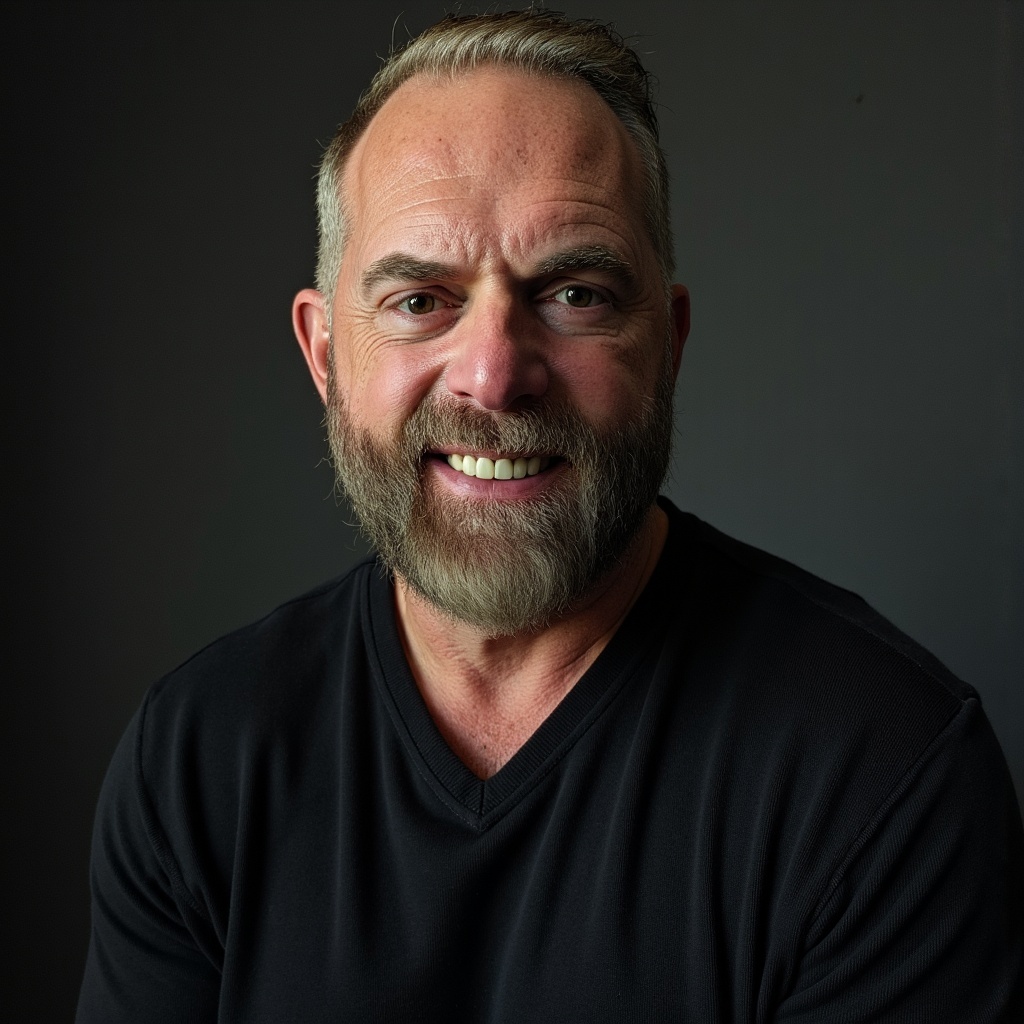
CEO
I’m a serial entrepreneur, investor, and founder of The Kronos Group, a peer-to-peer business community built for real operators. These business owners are still in the trenches, building, hiring, and solving daily problems.
Over the past 25 years, I’ve built, scaled, and sold multiple companies across industries, including logistics, transportation, real estate, and consulting, generating over $500 million in total revenue and employing thousands of people along the way. I’m still running two active seven-figure businesses and recently launched The Kronos Group to help others do the same.
I started from nothing, no degree, no investors, no safety net, and learned business the hard way: through experience, failure, and perseverance. I’ve succeeded and failed massively, and those experiences are what give me value. I know what it’s like to win big and what it’s like to get crushed, and I bring both sides of that to the table.
Through The Kronos Group, I help business owners find accountability, break through plateaus, and connect with others who understand the weight of leadership. My approach is straightforward, no fluff, no theory, just real business from someone who’s lived it.


